Art-Kustova-School

Watercolor Course
"Reflections"
Do you want to learn how to paint reflections in watercolor? Do you want to understand what tone, color, and shape to depict them in to create the feeling of a water surface? Do you want to realistically simplify reflections when working in the studio and outdoors? Do you want to have different ways of depicting Reflections in your creative arsenal (dark, light, with a change in tone taking into account aerial perspective)? Do you want to know how to work with any reference that you make that has reflections on water? Do you want to join the creative process with a supportive team of like-minded people? Are you ready to work hard to master skills that will stay with you for a long time? Then this course is for you!
About the course
This course REFLECTIONS is a continuation of my new teaching method with an even greater emphasis on knowledge leading to personal creativity. It is effective both separately and as a continuation of the course "Not just water".
Together we will learn to LEARN INDEPENDENTLY! I will show you how I work on any new topic myself. We will study completely different references in order to find analogies, see repetitions and be able to draw conclusions. And in accordance with this, build a system, structure, plan and understand how "Not to be afraid" of any plot with Reflections. Of course, there can be a huge number of reflections, but we will analyze the most basic types and methods of their depiction so that you can easily use the accumulated experience in personal creativity. In each lesson, we will draw a tone sketch, analyze compositional techniques, learn to see "dangerous places" that you need to pay attention to in the process and select a color for work.
We will build a solid knowledge of the topic of Reflections throughout all 4 theoretical and 3 practical lessons.
And you will see a detailed description of the lessons below.
The most important thing in my teaching is that you learn to learn yourself, feel confident in your personal works and develop your unique creativity. So that there are more happy artists who are pleased with themselves!
I believe in you and wish you good luck! See you on the course!
The work we will do with you
during the course
(click for a closer look)


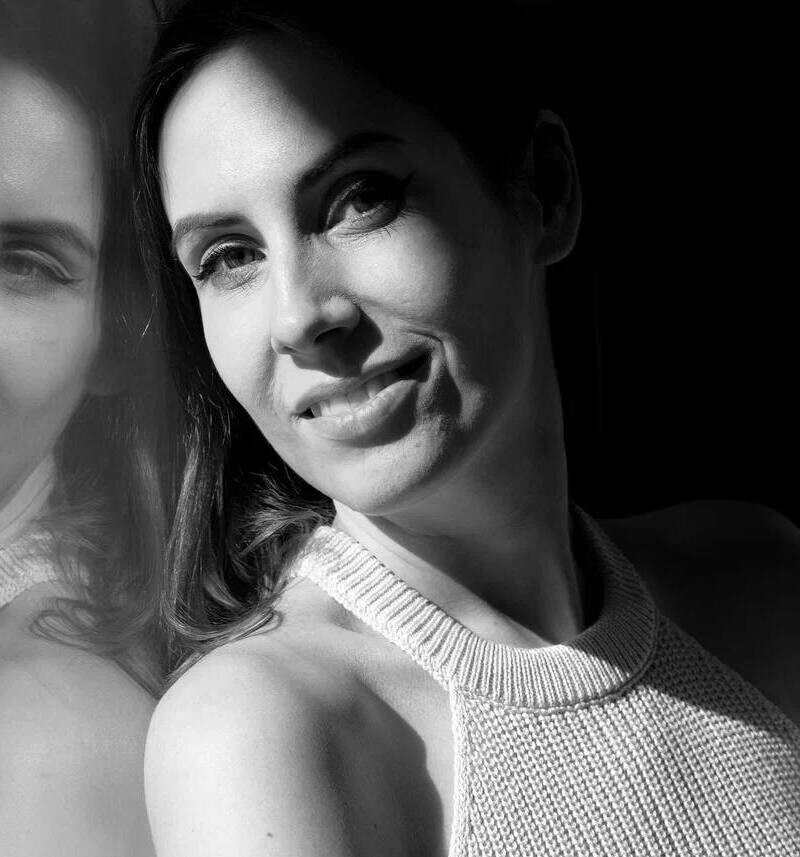
Course teacher
Brand Friend Winsor&Newton
Member of the Union of Watercolorists of Russia. Member of the Association of Plein Air Painters of Russia.
Creator of the book “Watercolor for Adults”.
From 2017 to 2022 she conducted more than 37 plein airs in 17 countries. (Great Britain, Austria, Spain, Italy, France, the Netherlands, Nepal, India, Georgia, Montenegro, etc.)
Anastasiya Kustova
Course program
Greetings
course content
Introductory lesson. Materials
In this lesson I will tell you what materials you will need in the course. What analogues of paints and paper can you use.
Lesson 1. Reflection Drawing Theory. Basic Mistakes.
The main lesson of the course. Together we build a base of understanding how to depict reflections. What options and combinations of image options there are. The main thing in this lesson: a structure that allows you to analyze any of your references in the future and understand "which side to approach". How to start working and make watercolors as successfully as possible. Make a plan in advance so that in the process you can enjoy only the process.
Lesson 2. Theory. Construction of a tonal sketch, composition, selection of colors.
Learn to LEARN INDEPENDENTLY! Do what is usually skipped in all master classes: preliminary work: analysis, sketch, analysis by tone and study of complex moments. Understanding the stages and color selection.

Lesson 3. Boats on the water.
In this lesson, we come up with our own plot and transform the reference. We understand how to depict greenery on different planes so that it is not just "green stuff". We create a deep work based on tone analysis.

Lesson 4. Working in the open air with reflection. Image options. Tone sketch.
In this lesson, we will transfer the acquired knowledge to the open air. We will figure out what to do when the weather and lighting change? How not to get confused? Which option to choose? We will fill the "small bank" of knowledge for future works.
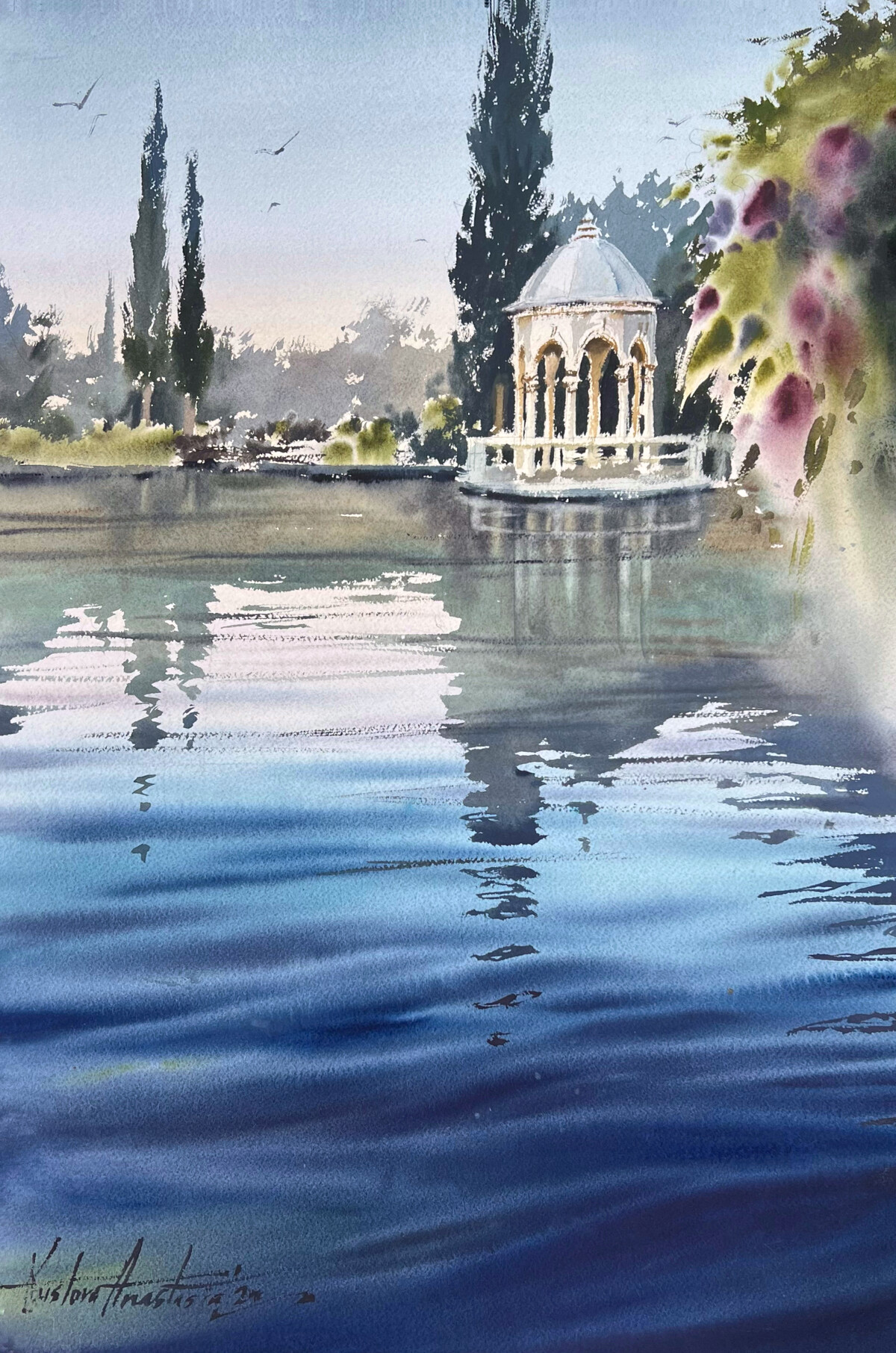
Lesson 5. Alcove.
We will draw a plein air plot with you, using the knowledge from the previous lesson. We will learn how to depict a light object, and what kind of reflection there can be and what it depends on. We will practice filling in the reflection. You will also need the knowledge of "How to Draw Water" from the course "Not Just Water", since we will not stop at water.
Lesson 6. Light Reflection Theory of Painting. Tonal Sketch.
In this lesson we will analyze how to draw a light reflection and why there is nothing "white" for an artist. Of course, we will build a tonal sketch and focus on difficult moments.

7 Lesson. Yachts on the water.
In this lesson we will draw an incredibly summery and atmospheric plot with a light reflection. We will practice the form and technical nuances of joining thicker paint and water.
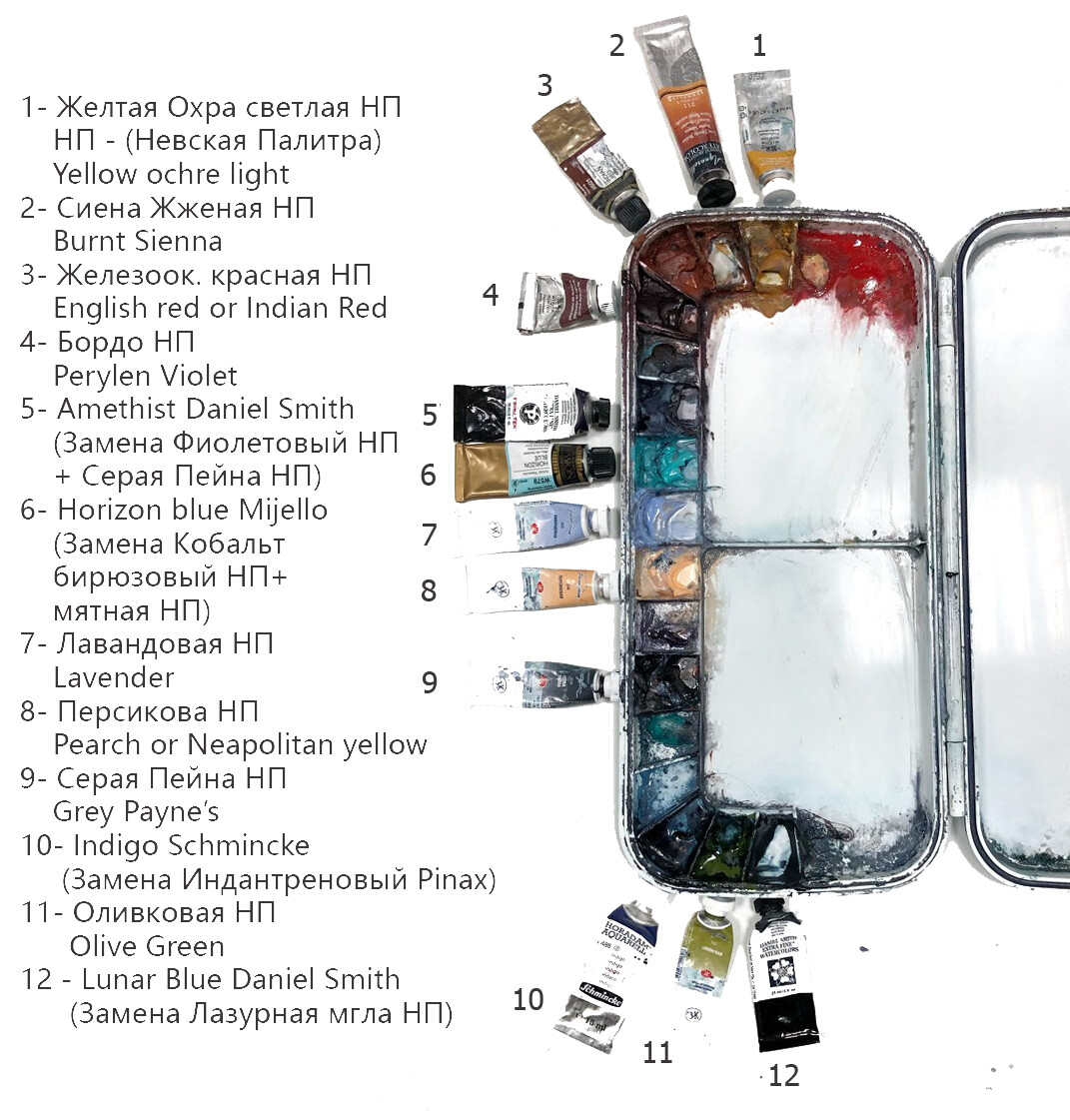
Paints
Above are the colors and palette of Anastasia with analogues in the Nevskaya Palitra. But remember that you can use your palette if you know it and are confident in it, taking into account only the comments on the use of warm and cool colors that Anastasia always makes during the lesson.
COURSE MATERIALS
Brushes
- Goat flute 30-40 cm
- Large synthetic / squirrel mix / calligraphy brush
- Light synthetic for details
- Flat wiping brush
- Fan brush for correcting mistakes
- Synthetic masking fluid brush
Paper
For this course you will need 100% cotton cotton paper
(it is advisable not to use Saunders Waterford, as we will be working in the rubbing technique, and this paper does not allow this). Of course, you can use any thick watercolor paper you are familiar with, but keep in mind that the effects may differ from Anastasia’s work.
Format no less than 30x40 cm
Preferably 38x56 cm, otherwise the effect of drawing drops on a small format will not be the same.
Other materials
- masking fluid (НП, Pebeo, Winsor& Newton? Sennelier)
- Melamine sponge
- A plastic tablet no smaller than your paper size
- pencil 2 В
- eraser
- water container
- paper napkins
Creating your own works
The main goal of the course is to explain the principles of working in watercolor techniques with a new topic, which will give you your own freedom in drawing. You will not just copy the work of the teacher, but will learn creative thinking.
WORKS OF COURSE STUDENTS WILL BE APPEARING HERE SOON!
5900₽ = 32 981₸ = 66,11$ = 62,83€
ACCORDING TO THE STATUS OF THE RATE AS OF 05/03/2025
PAY ATTENTION! DUE TO THE FEATURES OF THE PAYMENT SYSTEM, PAYMENT CAN BE MADE IN KAZAKHSTAN TENGE
5900₽
4 practical and 3 theoretical lessons (more than 7 hours of training videos)

IF YOU HAVE ANY QUESTIONS, PLEASE USE THE FEEDBACK FORM BELOW
OR EMAIL info@art-kustova-school.com
Art-Kustova-School
